Stop rebuilding the same report.
Mindshake scopes and builds AI systems for recurring tasks, around the tools your team already uses. Start with the information going in and the person who checks what comes out.
You are here · AI systems
What should the system take over?
Trace the task from input to finished work. Where is information copied? Which decisions need a person? What does the task cost in staff time? Those questions shape the build.
Start with a two-week scoping sprint.
Week one: walk through the task, record the baseline and agree who may use the information. Week two: test one example, define the human checks and write the build-or-stop recommendation.
You leave with a workflow map, an acceptance checklist and a proposed scope. Dates, access and fees are agreed before we start.
Discuss a scoping sprintFrom scattered notes to a checked report.
A weekly update, from scattered notes to a report someone has checked. Anything missing stays visible until a person answers it. Discuss a workflow.
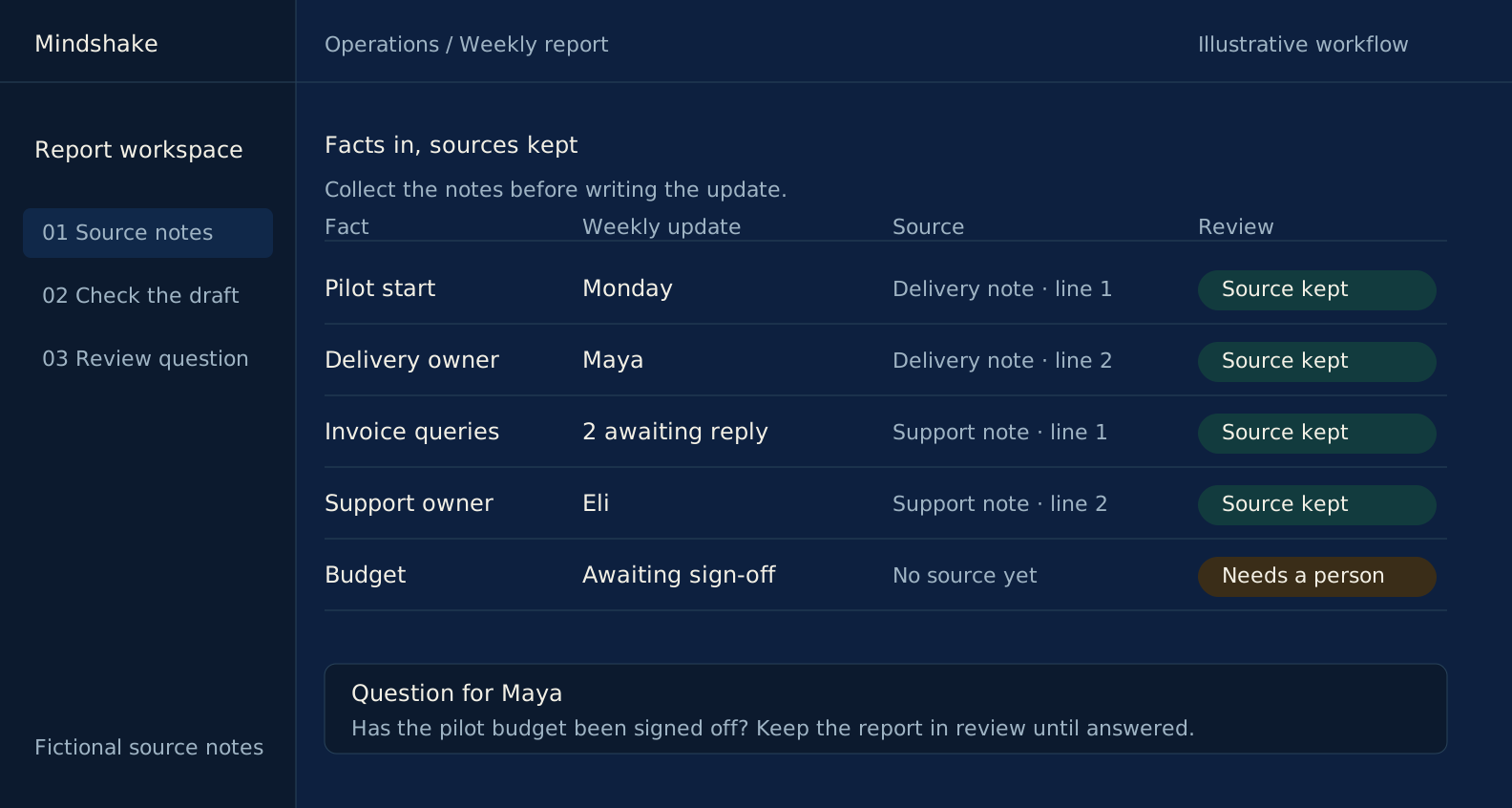
Five report lines sit beside their source notes. A missing budget stays visible.
Four facts match their sources. The fifth needs a person, not a plausible guess.
Maya needs to confirm the budget before the report can leave review.
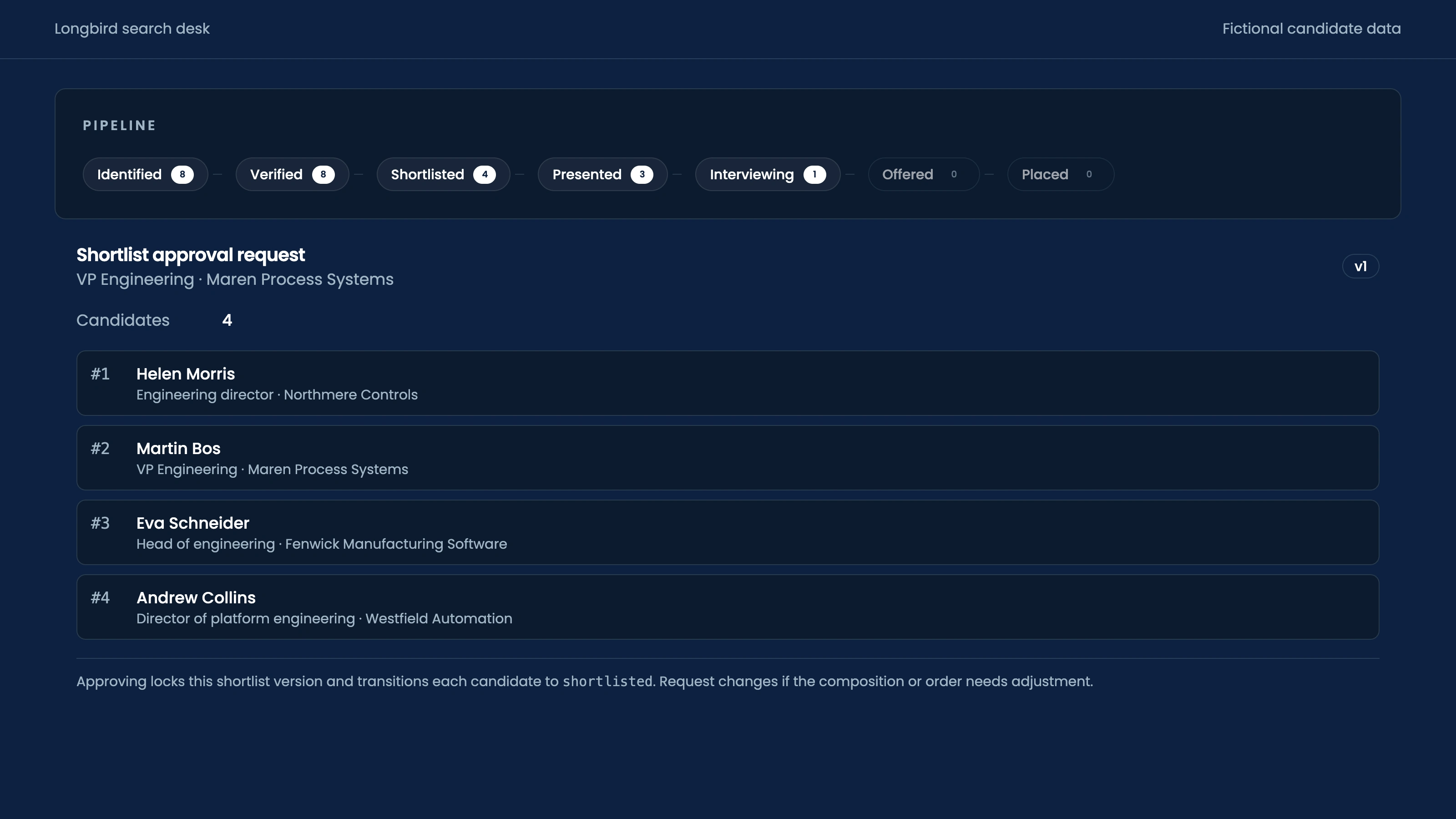
Fictional source notes and report. No live action is taken. See the search desk's approval screen.
What would we automate first?
Your partner: Tomàs Meulenberg. We agree the scope before building.
- 01
Weekly search update
- Input
- Pipeline export and interview notes.
- Check
- Reconcile the stage counts. Keep each statement beside its source.
- Output
- A reviewed update for the hiring team, with open questions attached.
- 02
Candidate reply desk
- Input
- Replies to the search outreach.
- Check
- Separate interest, questions and opt-outs. A person checks the proposed response.
- Output
- Prioritised replies and draft responses held for approval.
- 03
Interview evidence pack
- Input
- The agreed scorecard and interview notes.
- Check
- Distinguish a candidate’s claim from the example that supports it.
- Output
- A comparable evidence pack and the questions still worth asking.
- 04
Board briefing
- Input
- Decision notes, source documents and agreed measures.
- Check
- Confirm the date, owner and source of each figure. Flag missing information.
- Output
- A source-linked briefing a person can review before circulation.
- 05
Company answer desk
- Input
- The documents your team is allowed to use.
- Check
- Respect access boundaries. Quote the source and identify unanswered questions.
- Output
- Answers linked to the underlying material, with a route to its owner.
What are you buying: advice, a build, or a scoped workflow?
| Question | Consultancy brief | Development brief | Mindshake scope |
|---|---|---|---|
| Starting point | A strategic question. | A technical specification. | A recurring task and its current cost. |
| What to agree | The decision the advice should support. | The software and its acceptance tests. | The inputs, human checks, output and operating owner. |
| Useful first artefact | A prioritised recommendation. | A working increment. | A tested example and a decision on whether to build. |
These are ways to scope an engagement. Individual providers may offer more than one.
Before you commission a build.
Can it work with the tools we use?
We design around your existing systems. Tell us which tools the task passes through so we can assess the integration.
Who does the build?
We build it ourselves or direct a specialist we've vetted. Your partner scopes the work and stays accountable until the system runs in production.
What happens when the model changes?
We design the system so the model can be replaced. That makes the choice of model part of the build, rather than a permanent dependency on one option.